6061 Aluminum vs. 7075 Aluminum for CNC Machining
6061 Aluminum vs. 7075 Aluminum for CNC Machining
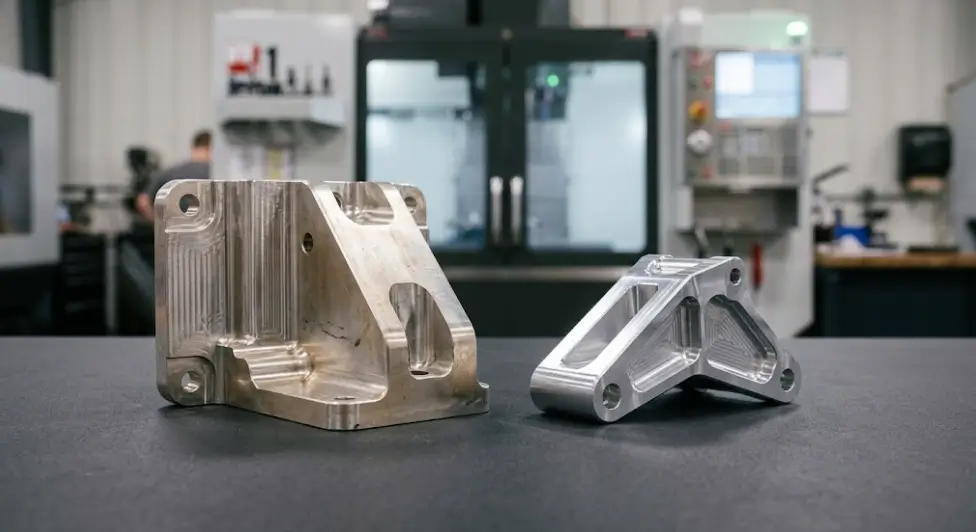
6061 and 7075 aluminum are both widely used for CNC machined components, but they are not interchangeable in every application.
6061 is a versatile choice for housings, brackets, mounting plates, and general-purpose structural parts. 7075 is often considered when a component needs a higher strength-to-weight ratio, particularly in load-bearing or performance-critical applications.
The difference is not simply that one alloy is stronger than the other. Material selection also affects raw material cost, corrosion protection, machining strategy, and the amount of performance a design actually needs.
For a part that carries substantial loads, the additional strength of 7075 may justify its higher cost. For many fixtures, enclosures, and general mechanical components, 6061 can meet the requirements without paying for properties the design does not use.
The right decision starts with the part's function, not the alloy's headline strength.
6061 vs. 7075 Aluminum: What Sets Them Apart?
The main difference comes from their alloy composition and resulting mechanical properties. Both are aluminum alloys, but 6061 is primarily strengthened through magnesium and silicon, while 7075 is primarily strengthened through zinc.
These differences influence strength, corrosion behavior, and how each material is used in engineering applications.
|
Property |
6061-T6 Aluminum |
7075-T6 Aluminum |
|
Primary alloying elements |
Magnesium and silicon |
Zinc, magnesium, and copper |
|
Strength |
Moderate to high for general engineering use |
Significantly higher |
|
Strength-to-weight ratio |
Good |
Excellent |
|
Corrosion resistance |
Generally good |
Generally lower; protection may be needed depending on exposure |
|
CNC machinability |
Good for many common machining operations |
Good, but machining strategy depends on geometry and condition |
|
Relative material cost |
Generally lower |
Generally higher |
|
Typical applications |
Housings, brackets, frames, mounting plates |
High-load components, aerospace-related parts, performance hardware |
Note: These are general comparisons of common T6 conditions. Actual properties vary by product form, thickness, supplier specification, and temper. Verify the applicable material standard and datasheet before making a design decision.
One detail matters when comparing published strength values: the temper must match. Comparing 6061-T6 with 7075-T6 is more meaningful than comparing unspecified alloy grades, because heat treatment can substantially affect mechanical properties.
Strength: When Does 7075 Justify the Upgrade?
Strength is often the reason engineers consider 7075. In common T6 conditions, 7075 has substantially higher tensile and yield strength than 6061. That can make it suitable for parts that must withstand higher loads without increasing their cross-sectional dimensions.
Consider a compact mechanical arm or a load-bearing bracket. If the component is limited by yield strength, switching to 7075 may provide a useful margin without adding weight or increasing the part's size.
But higher material strength does not automatically make a component better.
A part may be limited by stiffness, fatigue, buckling, fastener pull-out, or deformation around a mounting point rather than by the alloy's yield strength. In those cases, changing the material alone may not solve the underlying problem.
Before specifying 7075, review:
- The loads the component will experience during normal operation
- Whether impact, cyclic loading, or fatigue is a concern
- The dimensions and geometry that control stiffness
- The consequences of permanent deformation or failure
- Whether the design could be adjusted to meet requirements with 6061
For a general-purpose mounting plate or equipment housing, 6061 may already provide sufficient strength. For a compact, highly loaded component where weight and space are restricted, 7075 may be worth the additional cost.
The important question is whether the extra strength solves a real engineering constraint.
Corrosion Resistance and Surface Protection
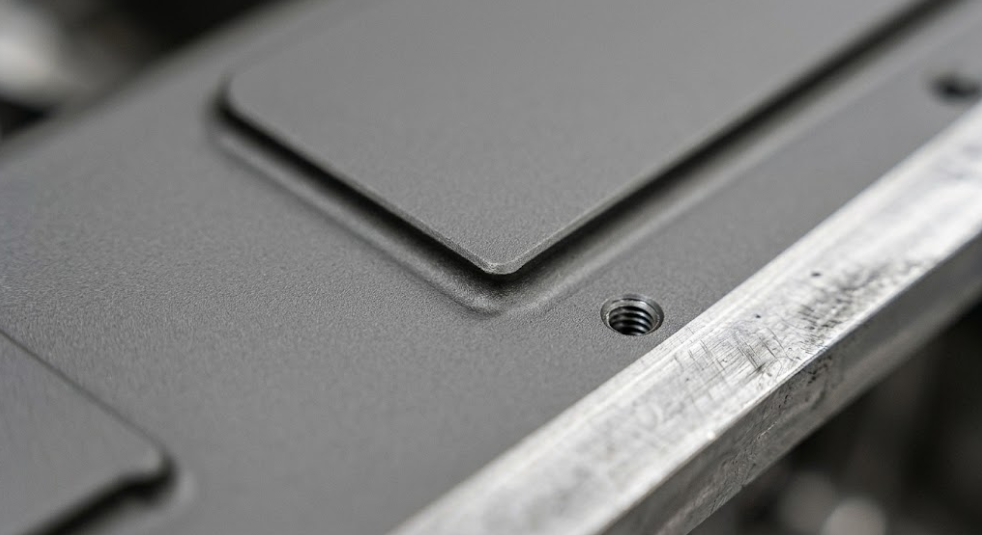
Corrosion behavior is another major difference between these alloys.
6061 generally offers good corrosion resistance for common industrial environments. It is often a practical choice for components exposed to normal atmospheric conditions, provided the surrounding environment and surface requirements are appropriate.
7075 requires more careful consideration. Its alloy composition, particularly its copper content, makes it generally less corrosion-resistant than 6061 in many environments. Depending on the application, the material may need additional surface protection.
This becomes important when parts operate outdoors, encounter moisture, or are exposed to chemicals or salt-containing environments. The actual risk depends on exposure conditions, the material condition, surface treatment, and contact with dissimilar metals.
Surface treatment should be selected for the service environment, not just appearance.
Anodizing can improve surface protection and wear behavior, but the outcome depends on the alloy, anodizing process, and required finish. Decorative appearance, dimensional changes, and the treatment's performance should be discussed before production. For demanding environments, the specification may require additional protective measures or corrosion testing.
If a component is exposed to a corrosive environment, evaluate the complete material-and-finish system rather than assuming that either alloy will perform adequately on its own.
CNC Machinability: Neither Alloy Eliminates Design Constraints
Both 6061 and 7075 can be CNC machined into precision components. The more useful question is how the alloy interacts with the part's geometry, required tolerances, and machining sequence.
6061 is widely used for machined components because it offers a practical balance of machinability, availability, and cost. It is suitable for many common milling and turning applications.
7075 is also machinable and can produce accurate, complex parts. However, the higher material cost makes unnecessary stock removal more expensive, and the part's geometry still determines how easily it can be manufactured.
For both alloys, machining performance depends on factors such as cutting tools, speeds and feeds, workholding, stock dimensions, and the rigidity of the setup. It is misleading to assume that choosing the stronger alloy automatically makes the finished part more precise.
Several design details deserve attention regardless of material:
- Thin walls: These can deform or vibrate during machining. Consider wall thickness, unsupported spans, and the sequence of material removal.
- Deep pockets: Long tools may deflect, while narrow openings can restrict tool access.
- Tight tolerances: Specify close tolerances only where they are functionally necessary, and identify critical dimensions clearly.
- Multiple setups: Features on different faces may require repositioning, adding handling and alignment work.
- Material removal: Large cavities and complex shapes can increase cycle time and raw material waste.
If the design requires tight dimensional control, review the CNC machining tolerances guide before finalizing the drawing. Material choice, feature geometry, and tolerances should be considered together.
Cost: Look Beyond the Price per Kilogram
7075 generally costs more than 6061 as a raw material. The actual price difference depends on product form, stock dimensions, quantity, supplier availability, and market conditions.
However, material price is only one part of the final component cost.
A part machined from a large billet may require substantial material removal. A complex geometry may need multiple setups, additional inspection, or specialized finishing. These factors can influence the quotation as much as the alloy choice.
The practical comparison is between two complete manufacturing options:
|
Cost consideration |
6061 |
7075 |
|
Raw material |
Generally more economical |
Generally more expensive |
|
Machining |
Often a cost-effective option for general-purpose parts |
Can be cost-effective when its higher strength is needed |
|
Surface protection |
Depends on the environment and finish specification |
May require more careful corrosion-protection planning |
|
Design opportunity |
Suitable for many everyday engineering components |
May support a lighter or more compact design where strength is critical |
|
Best cost decision |
Avoid paying for unnecessary strength |
Pay the premium when performance requirements justify it |
A useful example is a mounting bracket that could be made from either alloy. If both materials satisfy the load requirements and the geometry remains unchanged, 6061 may offer better overall value. If using 7075 allows the bracket to become substantially lighter or smaller while meeting the required safety margin, the additional material cost may be justified.
The comparison should include the part's functional requirements, material consumption, machining time, finishing, and expected service life.
Which Alloy Should You Choose for Your Application?
The following examples can help narrow the decision.
Choose 6061 when:
- The component has moderate strength requirements.
- Corrosion resistance is an important consideration.
- The part is a housing, mounting plate, bracket, fixture, or general mechanical component.
- Keeping material cost under control is a priority.
- The design does not benefit significantly from the higher strength of 7075.
Consider 7075 when:
- High strength relative to weight is a primary requirement.
- The component carries substantial loads within a restricted envelope.
- Reducing weight without sacrificing strength is important.
- The application justifies the higher material cost.
- The corrosion-protection requirements are understood and manageable.
These are starting points, not substitutes for engineering analysis. For safety-critical or fatigue-sensitive components, material selection should follow the applicable design requirements and validation process.
It is also worth considering whether the entire part needs to use the higher-strength alloy. In some assemblies, only selected components face demanding loads. Where the design and assembly permit, using different materials for different parts may provide a better balance of cost and performance.
Surface Finish and Post-Processing Matter Too
The selected alloy is only one part of the final specification. The surface condition can affect appearance, corrosion resistance, wear, and dimensional requirements.
For example, a visible aluminum enclosure may need a consistent cosmetic finish, while a functional bracket may prioritize corrosion protection and dimensional stability. A close-fitting component may need particular attention to dimensions before and after anodizing.
Before requesting a quotation, clarify:
- Whether the part requires anodizing or another surface treatment
- The required color or appearance, if applicable
- Which surfaces are functional or cosmetic
- Whether critical dimensions must be checked after finishing
- Any masking or contact-surface requirements
Do not assume that the same surface treatment will produce identical results on 6061 and 7075. If appearance or performance is critical, confirm the proposed finish and acceptance criteria with the manufacturer.
For more detail, see the CNC machining surface finishes guide.
Conclusion
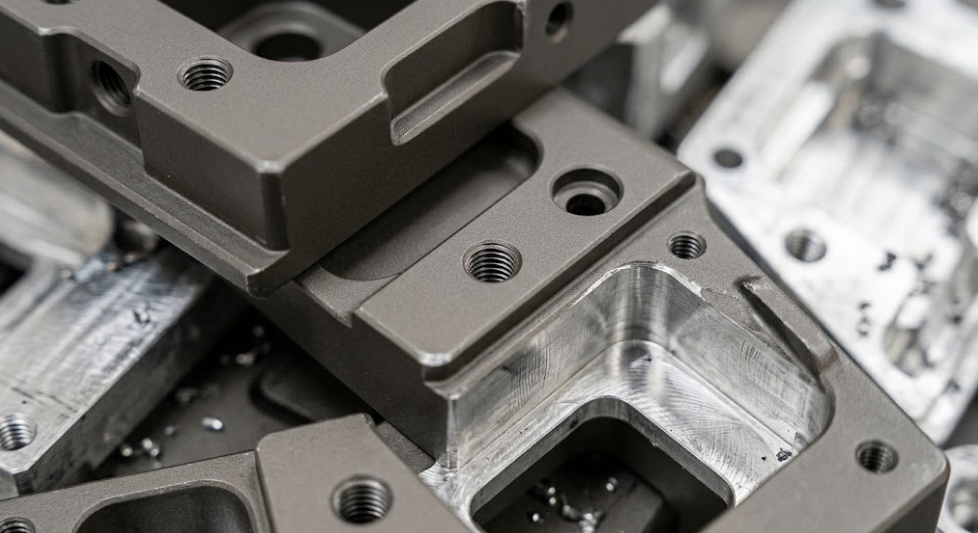
6061 and 7075 aluminum serve different priorities. 6061 is a versatile, generally more economical option with good corrosion resistance for many everyday CNC machined components. 7075 offers substantially higher strength and can be the better choice when a part must carry greater loads without adding weight.
The decision should account for the actual loading conditions, component geometry, corrosion exposure, finishing requirements, and total manufacturing cost. Choosing the strongest available alloy is not always the best engineering decision; choosing a material that meets the requirements without unnecessary cost is usually more practical.
If you are comparing materials for a new component, prepare the drawing, required alloy and temper, quantity, tolerance requirements, and surface-finish specification before requesting a quote. Contact SelenPreci to discuss your CNC machining project and evaluate the manufacturing requirements.
Frequently Asked Questions
Is 7075 aluminum always stronger than 6061?
In common T6 conditions, 7075 has substantially higher tensile and yield strength than 6061. Actual properties depend on temper, product form, and applicable specifications, so confirm the material condition before comparing values.
Is 6061 easier to machine than 7075?
Both alloys are suitable for CNC machining. 6061 is widely used for general-purpose machined components, while 7075 can also produce precise parts. Actual machining time and difficulty depend on geometry, tooling, workholding, and required tolerances.
Which aluminum alloy is better for corrosion resistance?
6061 generally offers better corrosion resistance than 7075 in many common environments. However, exposure conditions, surface treatment, and contact with other metals can change performance. Select the alloy and finish for the intended service environment.
Is 7075 aluminum worth the extra cost?
It can be, when its higher strength enables a component to meet demanding load or weight requirements that 6061 cannot satisfy as efficiently. If both alloys meet the design requirements equally well, 6061 may provide better value.
Can both 6061 and 7075 be anodized?
Yes, both alloys can be anodized, but the resulting appearance and performance depend on the alloy and process. If color consistency, corrosion protection, or dimensional requirements are critical, confirm the finishing specification with the manufacturer before production.
CNC Milling vs. CNC Turning: Key Differences, Features, and Applications